Wildlife
Home » Living Here » Wildlife
Wildlife in Our Community
Long Lake Heights sits in the Uplands, at the edge of Linley Valley, one of the largest stretches of untamed forest left inside Nanaimo. That valley is a living corridor, and our neighbourhood is part of it. The black bears, deer, raccoons, cougars, and dozens of bird species that move through here aren’t visitors. They’re residents, using the same land and water we do. Most you’ll never see. Some you’ll come to know by sound before sight. Getting familiar with them isn’t about rules or fear. It’s about understanding who shares this place, why they’re here, and how a little attention turns an ordinary walk into something worth slowing down for.
Why They’re Here
The simplest reason our neighbourhood has so much wildlife is also the best one: the habitat is healthy and connected. Linley Valley links forest, wetland, and lakeshore in an unbroken chain, and animals follow that chain right to our doorstep. A community that sees deer in the morning and hears owls at night is a community living next to something rare and intact. That’s worth celebrating, and it’s worth a little care to keep it that way.
Most of what follows comes down to one idea. Almost everything connects back to the deer.
The Deer Connection
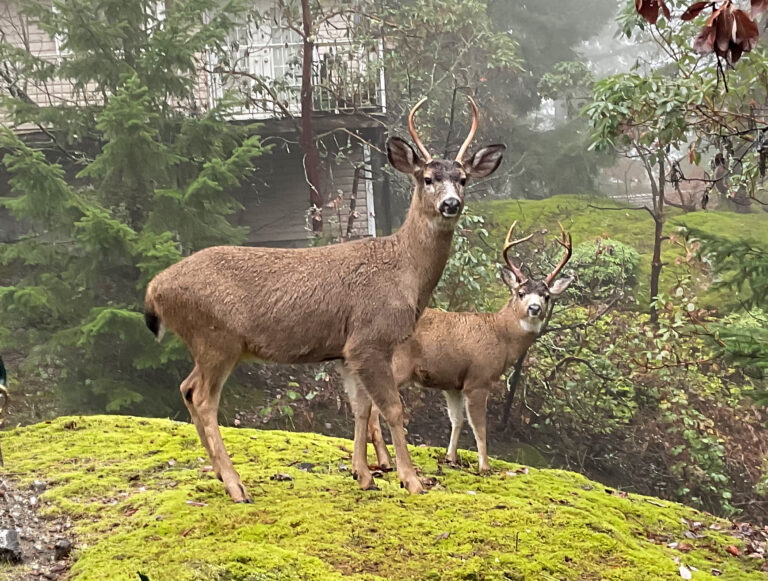
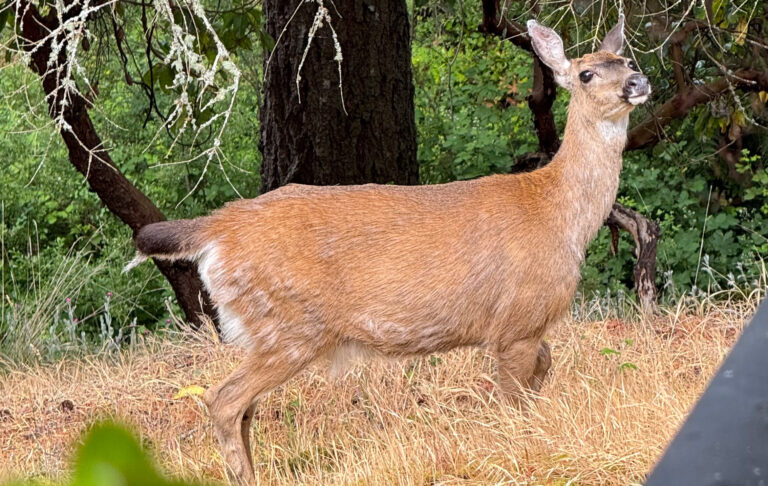
Columbian black-tailed deer are the most familiar animals here, and they sit at the centre of the local food web. Where deer go, the animals that hunt deer tend to follow. That’s why the single most useful thing any resident can do is also the simplest: don’t feed wildlife, and don’t leave food where wildlife can find it.
Feeding deer (or leaving out food that draws raccoons) does more than create a nuisance. It concentrates prey, and concentrated prey draws cougars closer to homes, pets, and people. A bird feeder, fallen fruit, or unsecured garbage can start the same chain with bears. Skipping the handout isn’t about being stingy with nature. It keeps deer wild, keeps cougars and bears at a healthy distance, and keeps pets safer, all at once.
Cougars
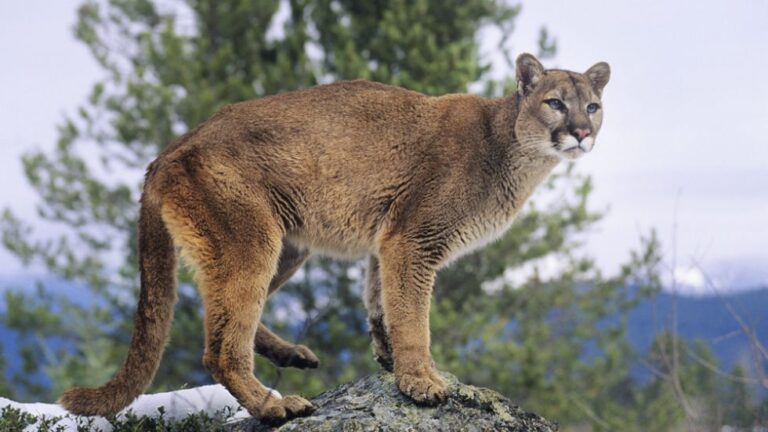
Vancouver Island has the densest cougar population in the world, and Linley Valley is part of their range. A local conservation officer once estimated that two cougars live in the valley at any given time. They’re shy, mostly nocturnal, and almost always pass through unseen.
That’s not cause for alarm. It’s a reason to be calm and informed. Cougars follow deer into town as winter approaches, so awareness matters most in the colder months. If you ever encounter one:
- Don’t run, and don’t scream. Running can trigger a chase response.
- Make yourself look as large as possible. Open your jacket, raise your arms or a pack over your head.
- Hold eye contact and back away slowly the way you came.
- Keep children close and pick up small pets.
The conservation officer’s phrase is the one to remember: don’t be fearful, be vigilant.
Black Bears
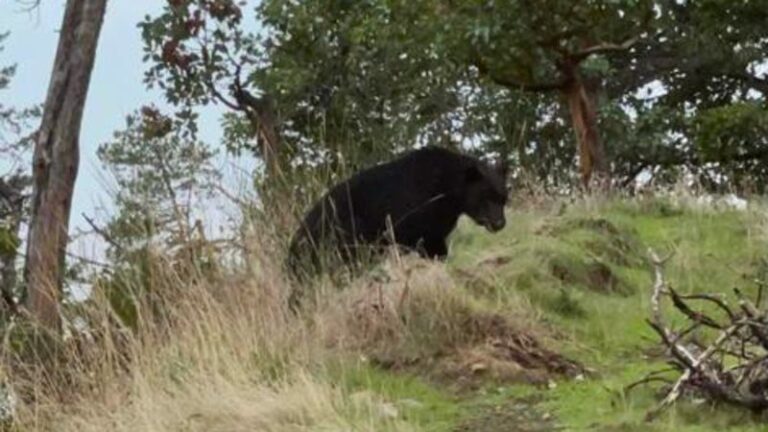
Black bears are the valley’s other large resident. (There are no grizzlies on Vancouver Island, only black bears.) Like cougars, they’re drawn by easy food, and the goal here is to never let a bear learn that our neighbourhood means a meal. Secure household garbage, bring bird feeders in during bear season, and clear fallen fruit. A bear that stays wild stays alive. A “problem bear” usually isn’t the bear’s fault, and the outcome is rarely good for the animal.
Pets and Predators
Our smaller neighbours matter too. Cougars, raccoons, eagles, and owls all hunt locally, and conservation officers recommend keeping cats and small dogs indoors at night, with dogs leashed on the trails. This protects your pet, and it protects wildlife: free-roaming domestic cats are among the most damaging predators of small birds and ground-nesting species anywhere they live. (More on that in the bird section below.) Keeping a cat indoors is one of the kindest things a resident can do for the songbirds and quail that make this place sing.
Who to Call
If you see a cougar or bear and want to log it, or if there’s ever a wildlife conflict that raises a safety concern, the BC Conservation Officer Service runs a 24-hour line:
RAPP (Report All Poachers and Polluters): 1-877-952-7277
For maps of recent cougar and bear sightings around Nanaimo, and clear guidance on responding to encounters, WildSafeBC is the best local resource: wildsafebc.com
Birds in the Back Yard
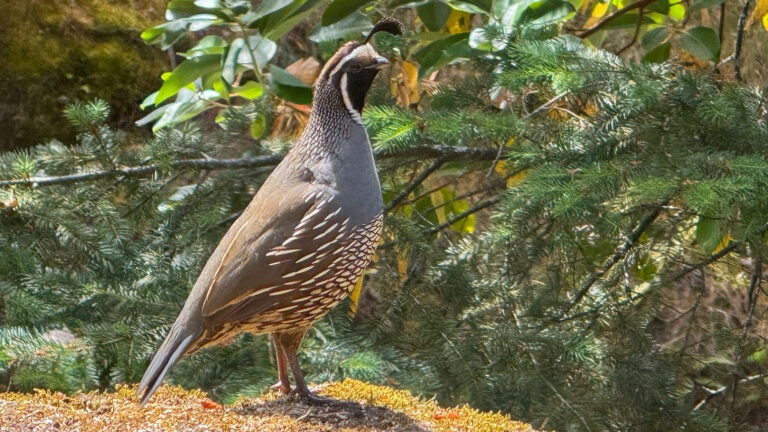
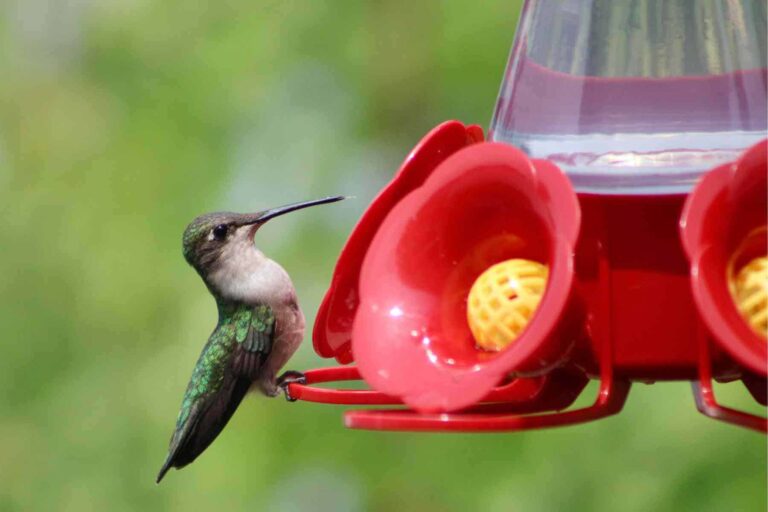
Our corner of Nanaimo stays busy with birds through every season, and you don’t need to go far to meet them. On lawns and low ground, look for American robins, dark-eyed juncos, song sparrows, and spotted towhees scratching in the leaf litter. In the hedges and at feeders, watch for chestnut-backed chickadees, house finches, and the year-round buzz of Anna’s hummingbirds, which hold on here through the coldest months. Listen in the trees for the tiny, outsized voice of the Pacific wren, the thin call of a brown creeper spiralling up a trunk, and the bright flash of a yellow-rumped warbler. Starlings move through in noisy groups, and down at Long Lake you’ll find Canada geese. Many of these birds you’ll hear long before you spot them, which is half the fun. The free Merlin Bird ID app, from Cornell University’s Lab of Ornithology, listens alongside you and names the birds singing in real time (it’s the same app many of us already use on our own walks here), while its companion site, All About Birds, has a full guide and sound library for every species above.