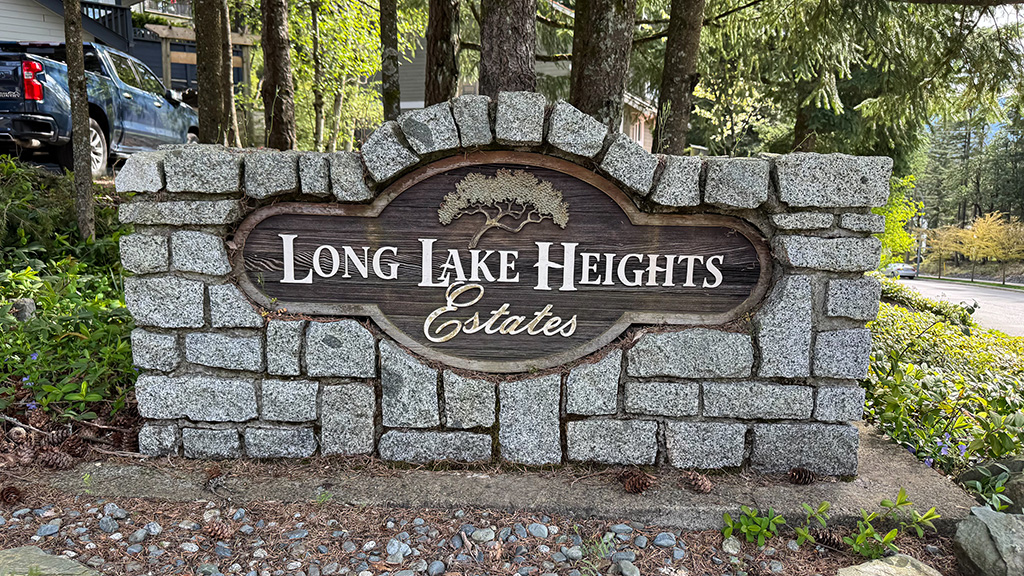
About Our Community
Home » About Our Community
Living at Long Lake Heights
The setting
Long Lake Heights sits on a series of rocky hillsides above Long Lake in Nanaimo, B.C., with mature Douglas fir and arbutus trees throughout the community. Many homes enjoy views of the lake, Mount Benson, or both. The bylaws protect native trees as defining features of the landscape, and the community’s natural character has been maintained since the first homes were built in 1980.
At a glance
- 229 homes across three development phases (1980–81)
- ~52 acres of forested hillside around Long Lake (VIS 830)
- 17 streets, all named for local wildlife and nature
- Bareland strata governed under the BC Strata Property Act
- Professionally managed by Colyvan Pacific, Nanaimo
- Private waste collection, snow removal, water service, and road maintenance included in strata fees
- FireSmart recognized community since 2019
Our history
The Long Lake Heights neighbourhood dates to 1979, when the first strata plan in the area — VIS 762, with 18 lots on Widgeon Place — was registered by Long Lake Heights Estates Inc. The larger community of VIS 830 followed in three phases:
- Phase 1 (1980): 39 lots along Summit Drive and the original core streets
- Phase 2 (1981): 23 additional lots extending the community
- Phase 3 (1981): 167 lots completing the development to its current 229 homes
A third neighbouring strata, VIS 1703 (8 lots on Starling Place), was added in 1989 by a separate developer. Together, the three stratas share approximately 56 acres of forested hillside and the underground infrastructure that serves them — water, sewer, storm drainage, and roads. Formal cost-sharing agreements between the three stratas were executed in 2020 and 2022.
While VIS 762 and VIS 1703 are separate strata corporations with their own governance, the three communities function as a single neighbourhood and share a common identity around Long Lake.
What is a bareland strata?
Unlike a conventional strata where owners share walls, roofs, and building systems, a bareland strata divides land rather than buildings. Homeowners own their home and their lot outright, and are responsible for everything on their property. The strata corporation manages the common property — roads, water infrastructure, and shared services — funded through monthly strata fees.
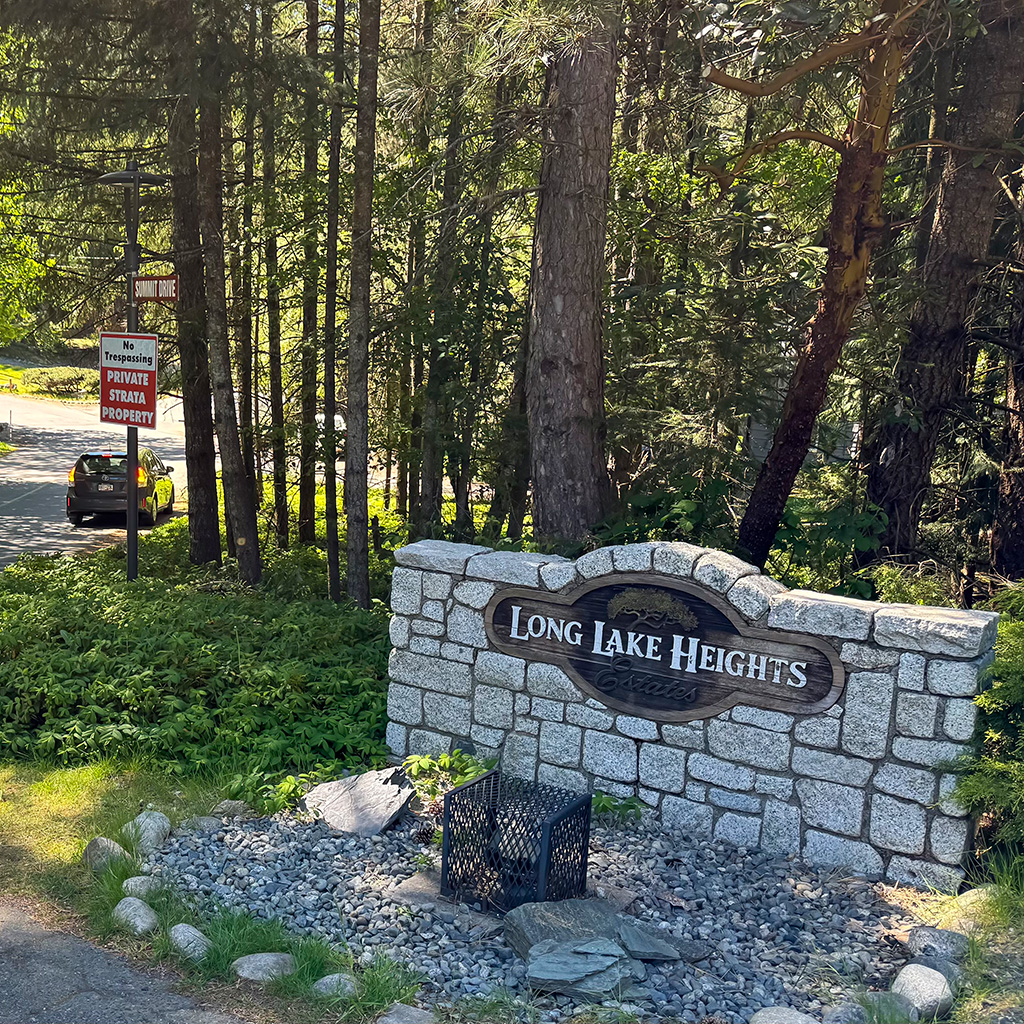
What your Strata Fees represent- Two principal costs:
- annual operating-services fees
- Capital Assets Management (infrastructure) costs funded through annual payment contributions to a standing Contingency Management Fund. This fund is a Provincial Strata Requirement and is guided by a Depreciation report prepared by certified professionals and designed to account and budget forecast for the maintenance, upkeep & replacement costs of ALL strata capital infrastructure assets (roads, water & sewer lines, fire hydrants, pump & lift stations, roads, electrical/lighting). Report Reviews and updates by Strata Council is required every 5 years. Considering inflationary costs Strata fees may vary annually to ensure proper operational & fiscal management & viability into the future.
- Strata fees are reviewed annually with strata residents ratifying through the new-year fiscal Budget proposed by Strata Council during the annual AGM, typically held in November.
What your Monthly Strata Fees provide:
Cover the services that keep the community running:
Private waste collection. Pickup runs on a consistent same-day schedule year-round, separate from the City of Nanaimo’s curbside program. This is one of the most valued benefits of living in the strata — no missed collections, no confusion about which week is which.
Snow removal. The strata contracts private snow removal for all internal roads, which typically exceeds city service levels for residential streets. Sandboxes are maintained throughout the community for icy conditions.
Water service and road maintenance. The strata corporation maintains the shared water system, sewer infrastructure, and all internal roads, including regular paving, line painting, and signage.
Community programs. Several annual programs run at no extra cost to homeowners, including FireSmart wildfire preparedness events, invasive species collection days, and the red bin yard waste program in spring and fall. These are organized by the Grounds & Communication Committee and rely on volunteer participation.
For prospective buyers and realtors
Long Lake Heights is a well-established community with a proactive approach to long-term planning. A few things worth knowing:
Financial health. The strata maintains a well-funded contingency reserve above the threshold recommended in its current depreciation report (valid through 2029). No special assessments have been levied in recent years, and operating expenses have tracked within budget.
Depreciation report. A current depreciation report (April 2025, prepared by D.R. Coell & Associates) covers all shared infrastructure across the three Long Lake stratas. It is available to owners through the Colyvan Pacific owner portal or on request.
Insurance. The strata corporation maintains comprehensive insurance on common property and infrastructure, including general liability and directors & officers coverage. Homeowners are responsible for insuring their own homes and contents. The full insurance certificate is available through the owner portal.
Bylaws. The complete bylaws are published on the Bylaws page — searchable on the website and available as a downloadable PDF. They cover exterior modifications, tree protection, parking, fencing, home-based businesses, and rental restrictions.
Strata documents. Form B (Information Certificate) and Form F (Certificate of Payment) for real estate transactions can be ordered through eStrataHub (operated by Dye & Durham).
The neighbourhood
Long Lake Heights is centrally located in North Nanaimo with easy access to Country Club Centre and North Town Centre shopping. Linley Valley Cottle Lake Park — over 400 acres of protected coastal Douglas fir forest with an extensive trail network — borders the broader Uplands area. Long Lake itself offers swimming, fishing, and paddling at Loudon Park.
Our streets
The community’s 17 streets are all named for local wildlife and the natural landscape — a naming tradition that dates back to the original development:
Charfinch Place · Deer Lane · Fawn Place · Ferntree Place · Fledgling Place · Grouse Place · Heron Place · Marsh Wren Place · Otter Place · Owl Place · Quail Place · Rainbow Crescent · Salal Drive · Squirrel Lane · Summit Drive · Swan Place · Woodhaven Drive
The neighbouring stratas add Widgeon Place (VIS 762) and Starling Place (VIS 1703) to the wildlife theme.